
 3 November 2025
Building an Unbreakable Ecosystem for Autistic Individuals
This series has 5 parts
- 1. Your Center’s Success Hinges on Parent Collaboration: A Strategic Imperative
- 2. The Trust Blueprint: Preventing Common Misunderstandings in Autism Care
- 3. The Power-Up Button: Why Your Insight is the Secret Weapon in Your Child’s Therapy Journey
- 4. 5 Simple Ways to Transform Your Parent-Therapist Partnership
- 5. Home and Center - Building Alignment, Not Just Assistance
Care forms the cornerstone of human development, providing guidance, comfort, and support to every individual. For someone with Autism Spectrum Disorder (ASD), however, the role of care takes on even greater significance. ASD being a complex neurodevelopmental condition resulting in differences in communication, social interaction, repetitive or restrictive behaviors and emotional regulation, targeted interventions and therapy sessions are essential components of support.
However, sustainable progress occurs only when these therapeutic strategies are fully integrated into the individual’s everyday environment. Achieving this level of integration requires a coordinated and collective approach, an Ecosystem of Care that includes parents, primary caregivers, family members, therapists, educators, and the broader community.
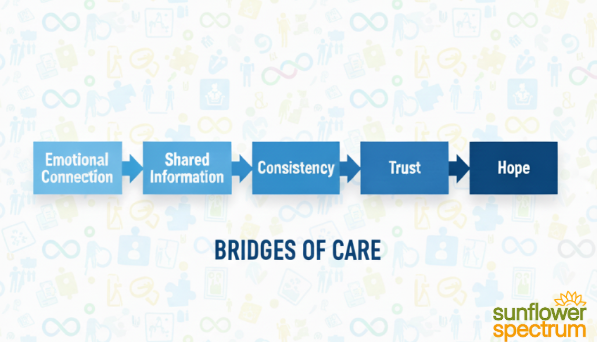
This ecosystem revolves around five interconnected pillars, often referred to as the Bridges of Care. When these bridges are robust, people with autism (PWA) are not merely surviving but they are empowered to thrive, develop skills, and achieve their potential.
The Ecosystem of Proper Care: Building the Bridges
The order of these bridges is significant, as each element lays the foundation for the next.
Emotional Connection: The Starting Point
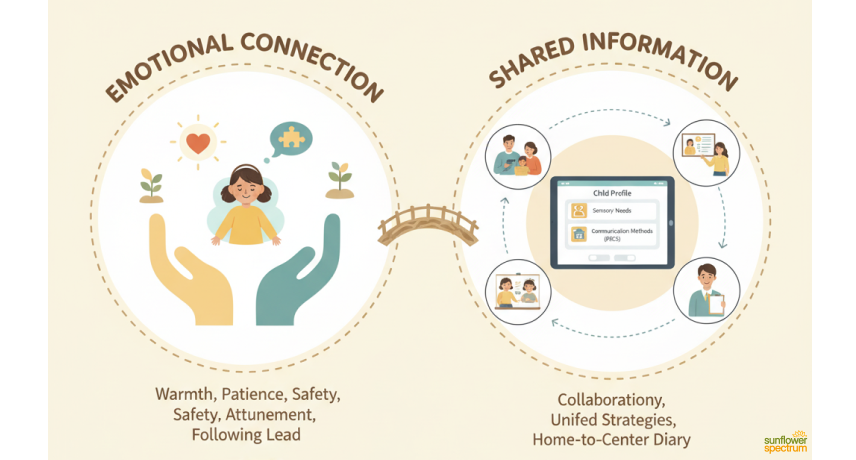
The first and most essential bridge is emotional connection. This establishes a genuine bond upon which all learning, development, and behavioral progress depend. Before any teaching, therapy, or intervention can be effective, the autistic individual must feel secure, valued, and loved. Emotional connection is not about flawless execution, it is about being present, responsive, and attentive to the child’s needs.
Ecosystem and Emotional Connection:
- Parents and Family Members:
The parent-child bond is the foundation of emotional security, built on unconditional acceptance. Parents must focus on connection rather than correction, offering warmth, patience, and consistent attention during daily interactions. Engaging with the child’s special interests, even if intense, strengthens trust and rapport. Caregivers must also learn to see challenging behaviors, such as meltdowns, not as defiance but as a form of communication signaling sensory overload, confusion, or distress. Validating these feelings and observing without judgment are crucial strategies.
- Therapists and Care Centers:
Professionals working with autistic children must intentionally foster a sense of safety, becoming predictable, reliable, and positive figures. Many therapeutic models emphasize relationship-first approaches, where adults follow the child’s lead to cultivate motivation and trust. During structured sessions, demonstrating empathy, encouragement, and understanding enhances engagement. Therapists can also incorporate meaningful activities with rich sensory input to strengthen emotional connection.
- Friends and Community:
Early years staff, peers, and siblings contribute by demonstrating kindness and acceptance toward children with additional needs. Celebrating small accomplishments and consistently reinforcing positive behaviors fosters a sense of belonging. Parents can encourage siblings to participate in activities the autistic child enjoys, such as puzzles or physical games. Every effort to connect conveys the message: “You are seen. You are safe. You belong.”
Shared Information: The Collaborative Blueprint
Once emotional safety is established, the next bridge is Shared Information. This ensures that knowledge about the child’s needs, routines, and strategies is openly communicated and consistently applied across caregivers. Effective care depends on transparency, collaboration, and the alignment of all individuals involved in the child’s life.
How the Ecosystem Ensures Shared Information:
- Therapist-Parent Communication:
Strategies learned during therapy sessions are ineffective unless parents know how to implement them at home. Therapists must provide clear, practical instructions, concrete examples, and actively seek feedback from parents on what works or does not. Collaboration between specialists and caregivers is essential for success.
- Parent/Caregiver Communication:
Parents serve as the central hub for sharing critical information with family, friends, educators, and other caregivers. This includes the child’s current challenges, communication methods (such as PECS or visual supports), sensory sensitivities, and daily routines. Maintaining an online Child Profile accessible to staff, parents, and professionals, or using a home-to-center diary, helps maintain continuity and consistency of care.
- Professional Collaboration:
Interdisciplinary collaboration among therapists, healthcare providers, and educators ensures the best outcomes for the child. Open communication and knowledge sharing between all stakeholders allow for quick responses to challenges and better decision-making.
Consistency: The Bridge to Stability
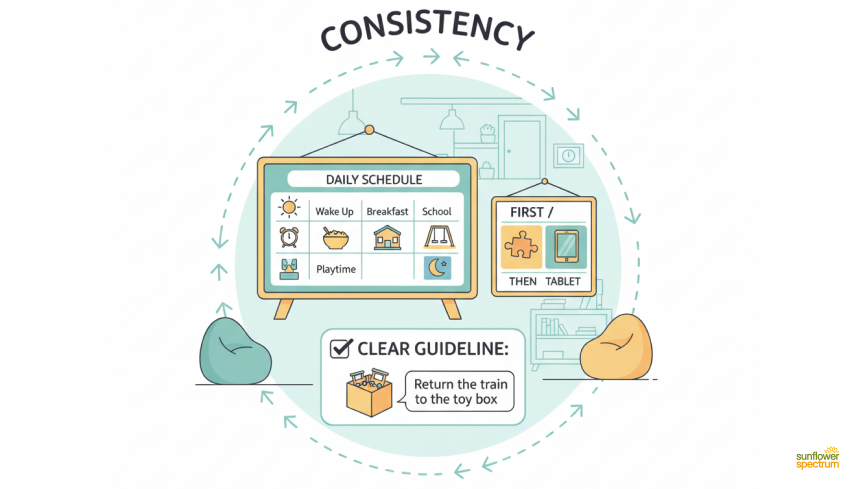
With shared information in place, the ecosystem can achieve Consistency. Predictable routines, strategies, and approaches are critical because inconsistency can generate anxiety and hinder progress in autistic individuals. Consistency is about reliability, not rigidity.
How the Ecosystem Implements Consistency:
- Unified Strategies:
Every adult, involved parents, therapists, teachers, and family members, should consistently apply the same behavioral strategies and use the same language. For example, if a therapist uses visual cue cards or “First/Then” statements, parents and educators should implement them consistently across home and school environments.
- Predictable Routines and Environments:
Autistic children thrive in structured, predictable settings. Daily routines such as waking, meals, and bedtime should remain consistent. Minimizing sensory distractions and providing structured environments is also critical.
- Managing Change:
Changes can be challenging for autistic children. When changes are unavoidable, preparation through visual planners, countdowns, or step-by-step explanations helps ease transitions. Consistency should also be maintained during activity transitions and when moving between home and educational settings.
- Clear Guidelines/Expectations:
Consistency requires setting specific, objective rules that the child can understand and follow. For instance, saying “return the toy train to the toy box” is clearer than simply saying “tidy up.”
Trust: The Anchor of Relationships
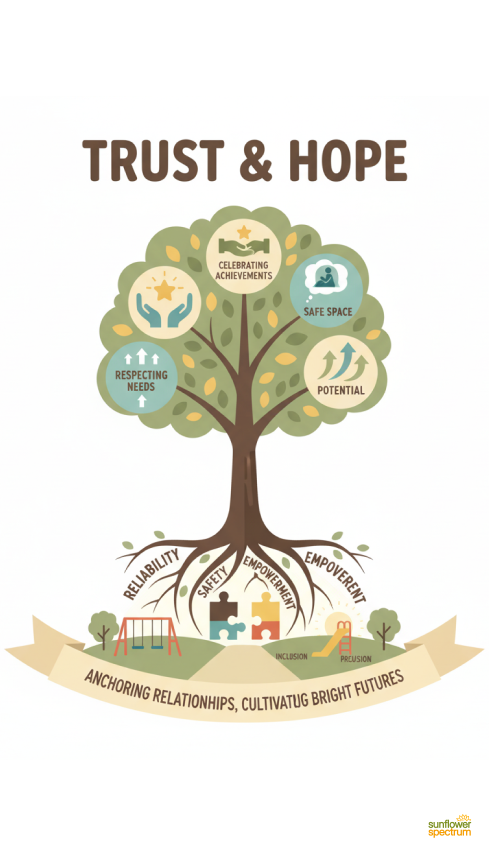
Consistency fosters Trust, the invisible thread that holds the ecosystem together. Trust allows for open communication, vulnerability, and risk-taking. For autistic children, trust lowers anxiety and encourages exploration and learning.
How the Ecosystem Builds Trust:
- Reliable Follow-Through:
Children develop trust when they perceive their environment and caregivers as dependable, with adults following through on promises and routines.
- Respecting Needs:
When a child’s needs are acknowledged and accommodated, for example, providing a quiet space when overwhelmed, they learn to trust their own ability to communicate and advocate for themselves.
- Family/Caregiver Support:
Trust is strengthened through patience, understanding, and reliability. Parents and caregivers should avoid punishing social mistakes, and instead teach appropriate behavior through simple rules and reinforcement.
- Professional Integrity:
Professionals build trust with families by offering honest, accurate feedback rather than only focusing on positive aspects. This mutual trust enables collaboration without blame.
Hope: The Enduring Light
Trust, grounded in safety, shared knowledge, and consistency, evolves into Hope. Hope represents a belief in the child’s potential and motivates both caregivers and the individual through challenges.
How the Ecosystem Cultivates Hope:
- Focusing on Strengths:
Hope emphasizes the child’s abilities such as memory, attention to detail, honesty, or strong focus on interests rather than deficits. Therapists and educators highlight progress and reinforce potential.
- Supporting Caregiver Resilience:
Hope reduces stress and burnout for parents and caregivers. Adaptive coping skills, problem-solving, and perspective-taking enhance quality of life and outcomes for both the child and the caregivers.
- Celebrating Achievements:
Recognizing every success, however small the first smile, eye contact, or handling a challenging situation maintains motivation and optimism.
- Creating Inclusion:
Hope is reinforced when communities foster inclusive spaces, such as schools with quiet areas or sensory accommodations, allowing the child to participate fully and meaningfully.
Conclusion
Start today by choosing one bridge to strengthen, listen with empathy, share insights with your therapist, or simply celebrate one small win. Each bridge you build makes tomorrow more hopeful.
Caring for an autistic individual is not a single act but a continuous, collaborative journey. The Bridges of Care: Emotional Connection, Shared Information, Consistency, Trust, and Hope, form the foundation of a resilient and nurturing ecosystem. Each bridge supports the next, creating a network where the child feels seen, understood, and empowered. When parents, caregivers, therapists, educators, and communities work together with intention, empathy, and consistency, autistic individuals are not only supported, they thrive. By building these bridges, we move beyond survival to possibility, helping every child navigate life with confidence, joy, and the knowledge that they are valued and capable of reaching their fullest potential.
Cite this article
Stuti Sapkota (2025). What Are the Bridges of Care?. Sunflower Spectrum. https://www.sunflowerspectrum.com/blog/what-are-the-bridges-of-care