
 6 November 2025
With a calm voice and a deep sense of empathy, therapist and psychologist Moniska Maharjan has been instrumental in the growth of Samriddha. Ms. Maharjan has spent about four years helping children on the autism spectrum find their rhythm in a world that often tends to misunderstand them. In this interview, she shares her journey, insights, and powerful moments that define not only her work with Samriddha, but as a therapist.
Initial Assessment
1. Could you tell us about your background and journey in psychology and autism therapy?
I've always enjoyed being around children. Being around children always felt joyful and deeply fulfilling. I started by working with small kids of nursery, UKG, and kindergarten mostly at my aunt's schools.
Later, I studied Psychology and Social Work, where I first came across topics like Autism Spectrum Disorder (ASD) and ADHD. Back then, autism wasn't discussed much, and I often felt the way society viewed autistic children was unfair. That curiosity led me to explore the field further.
I did my internship at Manobhawana and continued working there for almost three years. I also took various trainings and even conducted autism awareness campaigns. Alongside, I've worked on depression and anxiety-related cases too. While neurodiversity remains close to my heart, I hope to explore the wider landscape of psychology in the future.
2. What initially drew you to work in the field of autism and child development?
Honestly, when I first encountered autism during my studies, at first, I felt intimidated, unsure how to respond to certain behaviors but that fear turned into curiosity and, eventually, deep understanding.
I had experiences where the children became physically aggressive like biting me or tearing my clothes and it frightened me at the time. But gradually, I understood that their behaviors aren't intentional.
Autism is inherent and it's something you're born with, not something that happens because of bad parenting. That realization changed how I saw them. Over time, my curiosity turned into empathy. I wanted to understand them better and help them express themselves instead of being misunderstood.
3. How would you define autism, from your professional and personal understanding?
Autism is a spectrum: every child is different and it cannot be cured. But with the right approach, the symptoms can be minimized. We can support them in regulation. These children aren't "acting out" intentionally. Their behaviors are a way of communicating.
4. What was your first impression of the child (Sambriddha) when he came to you? What were the key challenges you observed?
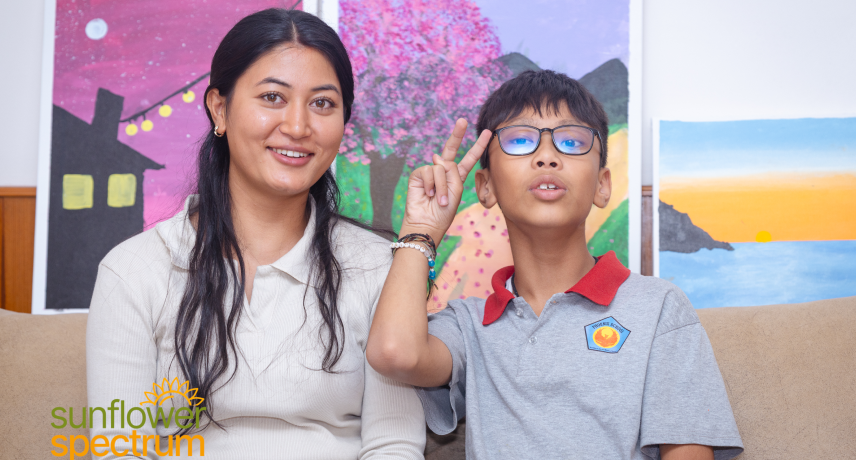
I first met Sambriddha at Lilac Homes. At first, he was less interactive, avoiding engagement with others, and showing little interest in playing or joining activities. For the first two or three days, he didn't interact much with me.
Then, one day, he had a meltdown when his bottle broke. He wanted to visit his maternal grandparents and became upset and hyperactive. That moment helped me understand his emotional side: how strongly he feels things but struggles to express them.
The main challenges I noticed were:
- Difficulty controlling emotions (anger, sadness, excitement).
- Weak body coordination. Issues with running, jumping, and flexibility.
- Poor social and play skills.
- Trouble following patterns or completing physical activities.
- Limited concentration and tendency to skip tasks, especially in Brain Gym sessions.
5. When you look at the child's progress, what would you attribute this "sudden" growth to?
From the outside, his progress might look sudden, but it isn't. It has been the result of consistent routine, structured activities, and constant teamwork between the therapist, shadow teacher, and parents.
He has been showing gradual improvements from not being able to sit or follow directions, to now completing Brain Gym activities and expressing emotions in better ways. The visible growth is actually the outcome of quiet, daily effort from everyone involved.
6. How did you collaborate with the parents to create a roadmap for intervention? What role did their involvement play?
The roadmap began with discussions with his mother, Sabina Ma'am. I also coordinated with the shadow teacher to align what we do at school and at home. Parents play a huge role in this kind of progress. For example, I guided them on pattern-breaking. When Samridhha used to insist on sleeping in a particular housing area. They slowly introduced change using visuals and explanations.
Even during the recent Gen-Z protest period, when he couldn't follow his usual 6 p.m. routine, the family handled it beautifully by showing visuals of the protest and explaining why he couldn't go out. That consistency and communication helped him adapt and understand. At home, they also implemented reward systems and reduced screen time. Earlier, they used to give in easily to his demands and now they're more structured. Their effort has made a huge difference.
The Power of Psychology & Therapy
7. Could you explain the therapeutic approach you used and why it worked for this child?
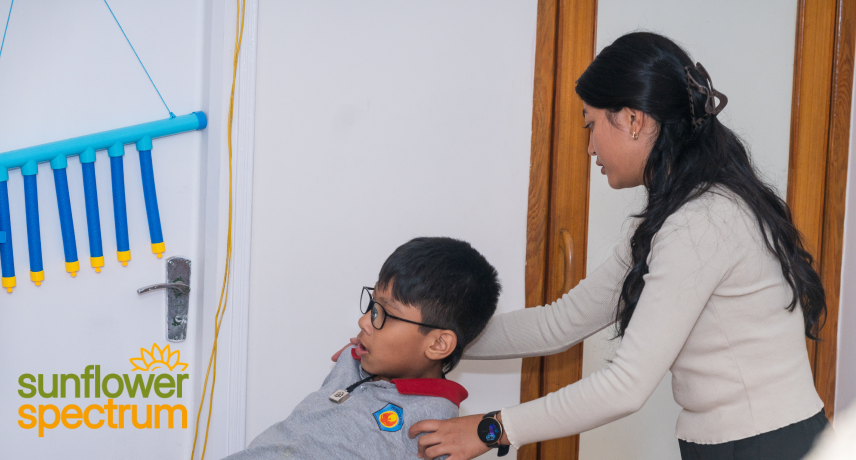
My plan followed an IEP (Individualized Education Program), guided by a therapist. We didn't focus on fixed repetitions (like "10 times"), but on how he performed and how his emotional response improved during the task. I use a mix of Play Therapy, Occupational Therapy (OT), and Brain Gym.
- Play Therapy helped build trust and made learning fun.
- OT addressed his body coordination, flexibility, and physical movement challenges.
- Brain Gym improved his focus, memory, and active listening.
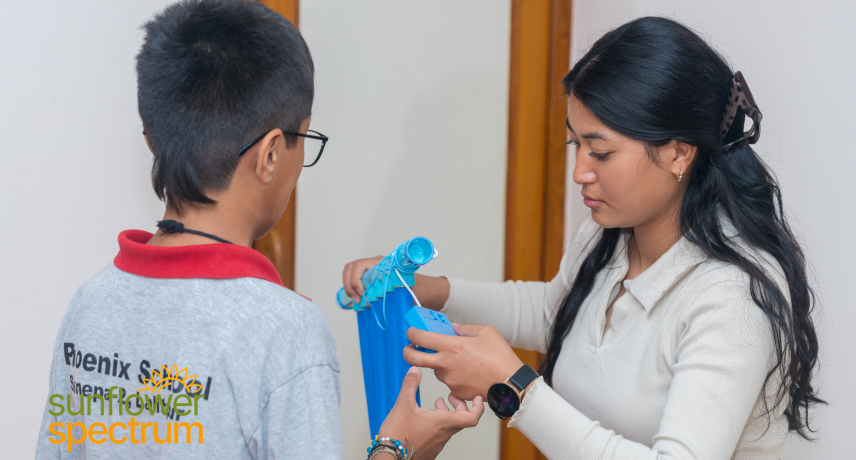
I believe that these approaches worked well because he responds really well to modelling. When I perform a task first, he visually copies it. It saves energy and builds confidence.
8. What techniques do you use for behaviour and tantrum management?
For behaviour management, I use a Reward System. His favorite rewards are playtime, swinging, or doing arts. He understands that the reward comes only after completing his task, though sometimes he still asks for it midway. When he cries or demands early, I use counting methods and breathing exercises to calm him down.
When he throws tantrums, I avoid reinforcing them. I guide him to go to his crying space and come back later when he is ready.
If it's a meltdown, I focus on emotional safety. I say "I'm here for you," and either give him space or offer a hug or his favorite toy, depending on what he needs.
A Broader Perspective
9. How does your role as a psychologist go beyond therapy: into educating and empowering families?
My work doesn't stop with the child. I also help parents understand why certain activities are important, for example, why jumping helps body regulation or how play develops social skills.
I noticed that bonding could be improved between Samriddha and the rest of the family members, so I encouraged them to play small games like ball together. It helped him recognize family roles and feel more connected. I also help parents focus on praising small positive behaviors rather than only reacting to the negatives. This positive emotional reinforcement is a lot more powerful than people recognize.
10. What are some of the biggest misconceptions about autism therapy in Nepal? How do stories like this challenge them?
The biggest misconception is blaming the parents, especially mothers, saying autism happened because they didn't take care during pregnancy or drank alcohol. Some even connect it to spiritual reasons.
All of that comes from a lack of awareness. People make their own assumptions.
That's why real stories like this matter; when people see autistic children improving through therapy, they realize it's not about blame or miracle cures; it's about understanding, patience, and consistent support.
11. What is the most rewarding part of your job and what's the biggest challenge in Nepal's context?
The most rewarding part is seeing small, genuine changes when a child who used to skip activities finally completes one with joy. Those moments are priceless.
The biggest challenge is the lack of resources and structure in our field. There is currently no official licensing system in place for therapists. There's also no government system for autism acceptance or support.
Schools, even big ones, often don't have space or training for autistic children. They just tell parents to go elsewhere where they accept autistic children. That needs to change.
12. What kind of changes would you like to see in Nepal's autism care system?
I'd love to see
- Professional licensing for therapists.
- Free training and workshops provided by the government.
- Policies and budget allocation for autism care.
- Inclusion programs in schools so autistic children can study alongside others.
- More teamwork and collaboration because one person can't handle everything alone.
13. What have you personally learned from this journey?
The biggest lesson is patience. I wasn't always patient, but this work has completely changed me. I've learned to appreciate small progress, connect emotionally, and never expect quick results.
My thought process has changed too. Earlier, my thought would be, "He didn't do it." Now I think, "He hasn't been able to do it, yet." That small shift changes everything. Seeing these children grow, even in the tiniest ways, is the most rewarding feeling.
For Moniska, every smile, every small step, and every moment of connection is a reminder that progress doesn't always come in leaps. Sometimes, it arrives quietly, in the laughter of a child learning to trust the world again.
Cite this article
Stuti Sapkota (2025). The Architect of Change - The Psychologist. Sunflower Spectrum. https://www.sunflowerspectrum.com/blog/interview-with-therapist-moniska-maharjan