
 10 October 2025
The diagnosis of my son completely changed our family life. Initially, I felt ashamed and scared to take him out, constantly worrying about other people's judgment. This made it difficult for us to participate in social activities. The negative comments and whispered judgments from other parents and even family members isolated us, trapping us in our home without any guidance.
The Early Days & The Diagnosis
What were the first signs you noticed that made you feel something was different?
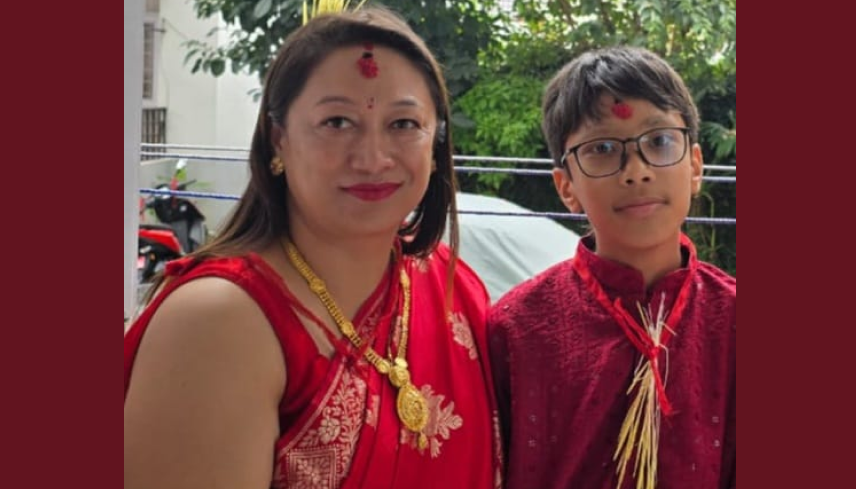
The first signs that indicated something was different with Sambriddha, my 12-year-old son, began shortly after he was born. I had gestational diabetes during my pregnancy, and he spent 10 days in the nursery. I along with my family had observed a few developmental challenges and also there were some concerns regarding his social interaction.
In the beginning, my son was a child moving at his own pace, a pace far different from others. He took six months to reach milestones that a three-month-old would. He didn’t take his first steps until much later than other children, 17 months to be precise. In those early months, his world felt quiet, with no laughter or response to our voices.
Early Developmental Concerns
Following his time in the nursery, at 17 days old, Sambriddha's right hand and leg started shaking and moving while he slept, which was an early and concerning sign. I was alone at home and terrified. All I could do was hope that nothing was serious and my son was okay.
From then on, all his developmental milestones seemed a little slower, even in comparison to our older son who underwent open-heart surgery during his early days. A key developmental milestone, rolling over, took him six months to accomplish. He never crawled like other kids of his age, and couldn't stand properly. He didn't begin walking at the age of a normal child to walk or stand.
Communication and Social Interaction Challenges
As he grew older, a lack of communication and social interaction became more apparent. Sambriddha showed no laugh, no response, and no eye contact, particularly after he turned 17 months old. He briefly spoke the word "papa," but his voice progressively receded and eventually faded entirely by 18 months. By two years old, his grandmother, who used to work as a social worker, and I, consulted with Dr. Reyna Shrestha, who diagnosed him with mild autism.
At that time, I was unfamiliar with the term "autism," but I knew my son's activities were different from those of other children.
What was your initial understanding of autism, especially within the context of Nepali society? What were some of the common misconceptions or fears you encountered?
Initial Understanding
Initially, I had no idea what the word autism meant until Dr. Rena Shrestha diagnosed my son. After diagnosis, we visited different schools and even traveled to various places seeking answers, yet all we received were partial explanations. We were told that it might simply be about eye contact and some therapies can be done but the proper help and guidance was lacking.
Misconceptions and fears
I even faced people telling me that my son was ‘the way he was’ because I wasn't socializing with him enough. I was scared and embarrassed about what others would think of us. Being a covid child, I somewhere felt accountable too, for not being able to provide socialisation for my child. But I was helpless. I felt helpless. This feeling further fueled my shame, stopping me to take him out and instead getting us into a vicious cycle.
People would even shout at my baby, tell their kids not to play with him. Even as a mother, there was nothing much I could do, which made me feel powerless as a mother.
He didn’t get the attention from people that were around. From those that he drew attention from, they would stare at him as if he was something different to be gawked at. I felt people were watching my child as if he were not even human but a dummy. It’s not what he needed either. Normalcy is what he needed. I definitely needed that.
Describe the moment you received the formal diagnosis. What were the immediate thoughts and emotions that flooded you? Did you feel a sense of clarity or a sense of loss?
My mother, a social worker in the health sector, saw the early signs and advised me to get a diagnosis. We had known that our baby was different and special, so we didn’t need much convincing. Wanting to give it a try, I along with my husband and mother took Samriddha for a formal diagnosis. We didn’t know what to expect.
He was diagnosed with mild autism. We were only told that therapy existed but knew nothing more about it: where it was provided, the process, the role of parents. We didn’t even know that the symptoms and difficulties could be tackled with therapy and continuation at home.
The session felt more like a moment of confusion than clarity. We just stopped everything afterward because we believed that therapy was like sending a kid to school, but for buying time for parents rather than learning for the student.
When your child was first diagnosed, how did it affect your family life, your relationships, and your personal sense of self?
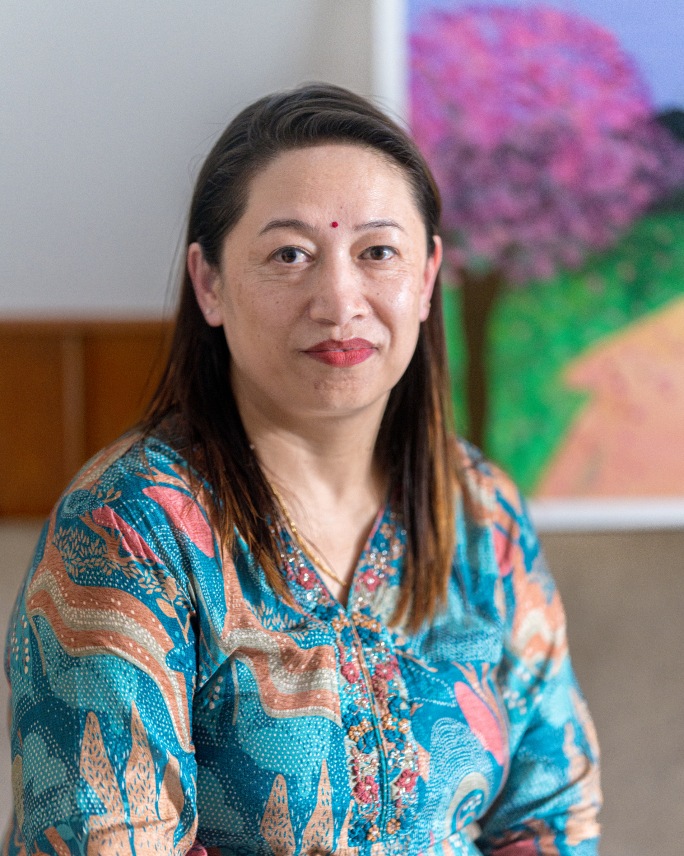
The diagnosis of my son completely changed our family life. Initially, I felt ashamed and scared to take him out, constantly worrying about other people's judgment. This made it difficult for us to participate in social activities. The negative comments and whispered judgments from other parents and even family members isolated us, trapping us in our home without any guidance.
This isolation and the overwhelming need to care for my younger son strained my relationship with my older son, who was a teenager at the time. He felt we had stopped loving him because of all the attention Sambriddha required, and this led him to experience a period of depression. The diagnosis, when it finally came, felt like a new, heavy weight, giving a name to our isolation and pain but offering no clear path forward.
Looking back, what expectations did you have when your baby was first born, and how have those expectations changed over time?
The family's initial expectations have undergone a significant transformation. The original aspiration was for a traditional brotherhood, where two siblings would develop a carefree relationship as companions and friends. However, this expectation was superseded by the complex reality of managing a child's diagnosis and the subsequent social isolation.
The mother's hopes have since evolved beyond the desire for a simple, uncomplicated bond between her sons. Her new, more profound vision is that her older son, who previously faced depression, serves as a devoted guardian, providing crucial support to his brother. Ultimately, her focus has shifted from merely seeking a happy family life to actively cultivating a world in which her son is understood and accepted. Her current objective is to foster an autism-friendly environment, a space where her son can flourish not only within their family but also as members of a truly inclusive community. This represents a far more intricate and purposeful expectation than her original, simpler dream.
The Pivot to Action
What was the catalyst for this shift? Was there a specific moment, person, or piece of information that gave you hope?
From the very first day, the word "different" hung in the air, a label that set us on a new, uncharted course. The centre’s suggestion to visit Phoenix School felt like a distant promise, a hope we couldn't yet reach because he was too young. We tried other Montessori schools, but they were not the right fit. Each attempt felt like a step forward, but we always ended up back where we started.
Then we heard about CFA school, which offered therapy. It was a step into a world we didn't understand. But the true turning point, the real profound shift didn't happen until we finally received the call from Phoenix School. After two years of waiting, we were in.
That admission was the catalyst. It was a whole-family intervention. His teachers, especially his very best shadow teacher, and the detailed reports they sent home became our road map. We learned about his daily activities which he does in school and were given structured guidance to work with him ourselves even at home.
The school gave us back a sense of control and purpose. It was no longer a journey of just surviving; it was a journey of learning, understanding, and actively building a path forward.
Do you recall the initial steps? What were the challenges in finding reliable support and resources in Nepal?
Our initial steps were born of desperation: we simply tried to find a school for our son. The first two schools, including a Montessori, were not the right fit; he was isolated and unhappy. After a couple of years of searching, we were told CFA (Centre For Autism), that offered therapy. However, the experience was not what we expected. Therapy works differently for everyone and every therapeutic center has a different approach. I say, it didn’t work out well for my son because then, his behavior got worse.
Finding reliable support was an immense challenge. We were told about therapy but received no guidance on what it was or where to find it. This lack of clear information and resources in Nepal left us feeling lost and alone, leading us to "stop everything" for a period of time.
Can you describe the "before" and "after" of this massive growth spurt? What were the child’s specific challenges at the beginning, and what are their strengths now?
Before: A World of Isolation
My son battled with basic interactions, lacking proper eye contact.I remember the day when he turned 18 months, the little words he had started saying just faded away. He also had trouble walking. And once he started walking, he had trouble sitting down.
He lived in his own world with very little connection to our family. His daily life was a constant challenge, as he struggled with fundamental skills like sitting, eating, toilet, walking, and talking. When he didn't get his way, his frustration would explode; he'd cry loudly and lie down on the floor, a stubbornness that felt insurmountable.
After: A Blossoming of Strengths
Now, my son is in a peak development phase. The changes have been nothing short of incredible, with most of the major shifts occurring within the last year. My immense thanks to the school's concern and intervention. His verbal communication has blossomed, and he's now in a development phase where he can engage in two-way conversations, showing his growing ability to interact and share with others.
His strengths have emerged in beautiful ways. He is gifted in painting, music, and rhymes. He has also developed positive habits, like cleaning up after himself, and has a dislike for dust. His behavior is constantly evolving, with new improvements showing up every day. This one year has been a testament to his resilience and the vigour of dedicated support, showing us that our efforts have led to a massive and meaningful transformation.
What role did you, as a parent, play in this transformation? Was it a change in your approach, your mindset, or your daily routine?
Sometimes, when I look back, I wonder how I even managed to find the strength. Everything I did for my child came from a place of pure love, not from professional training or a therapist's manual. In those moments, I learned to be resourceful, realizing that a formal tool wasn't always necessary. I began to see every ordinary object around me as a potential instrument for growth and therapy.
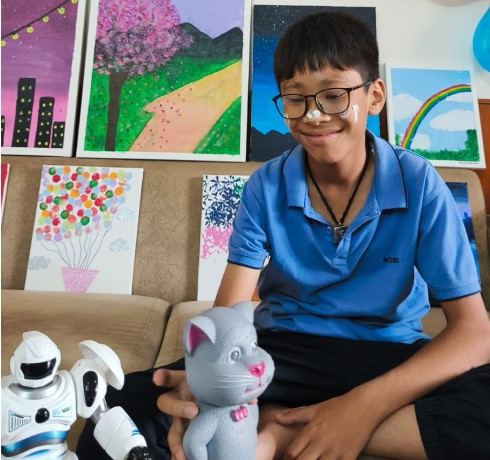
Instead of expensive toys or specialized equipment, I learned to use whatever I had on hand. Even a simple spoon could be a powerful tool for developing fine motor skills and hand-eye coordination. Kitchen utensils like spatulas or whisk were repurposed as tools to teach him about different textures, weights, and shapes, turning a mundane task into a sensory exploration. Even a handful of beans could be a powerful tool for teaching sorting, counting, and focus. The key was not the item itself, but the creative and loving intention behind its use.
Through this process, I understood that therapy isn't confined to a clinic or a scheduled session. It’s an ongoing, creative process that can happen anywhere, at any time. The world around us is full of potential tools for learning and development if we simply learn to see them that way. We just need to tap into our creativity and love to transform the ordinary into something extraordinary.
Slowly, I watched him learn to clean up after himself, and over time he became immaculate to the point that I could hardly believe he was the same child I once worried about. I had to teach myself to break his patterns. When he cried, I resisted the instinct to immediately soothe him. Instead, I gave him space, let the storm pass, and then gently helped him understand what had gone wrong. It broke me inside some days, but it also taught me resilience I never thought I had.
I even gathered courage to speak and run a small awareness program on my own street, because I wanted people to see autism not as something strange, but as a part of our everyday life. And when the school finally began sharing detailed notes about his daily activities, it was a sign for me to begin. A sign that I now had a clearer path, that what they started in school could be carried forward at home.
It wasn’t just therapy, or school, or home. It was the weight of a mother’s persistence and the joining of two worlds that allowed him to grow into his fullest self. And every step of that journey came with both tears and quiet victories only a parent can truly understand.
A Message of Hope
What is the one thing you wish you had known at the beginning of this journey?
Sometimes, I can’t help but think what if I had known earlier? What if the word autism and the therapies that exist for it had reached me when I needed them most?
Maybe my child would be standing further ahead today. Maybe the sleepless nights, the endless stress, the moments of helplessness, would not have weighed profoundly on me. It is a thought that never leaves a quiet ache that reminds me how much time was lost before I even knew where to begin.
What would you say to a parent who has just received an autism diagnosis for their child and feels like they have nowhere to turn?
To every parent who has just heard the word autism tied to their child, I want to whisper what I once desperately needed to hear: don’t panic, but don’t wait either. I lost precious time not knowing, not understanding. If I had been told sooner about autism and the therapies that could help, I believe my child would have been much further today. That thought still lingers in my heart. Early diagnosis can change everything.
Therapy, too, is not something that begins and ends in a 45-minute session. I learned that the hard way. The real work happens in the home, in the little things. How you guide them, how you repeat lessons until they become a part of daily life.
I also wish someone had warned me about certain tools. Visual charts can be lifesavers for children with severe autism. And when it comes to choosing a therapy center, please trust your own instincts. Don’t go blindly with what others recommend. Try, compare, observe and only then decide what truly fits your child’s needs. Because at the end of the day, no one knows your child the way you do.
Share a small moment of joy or a recent achievement that truly made you feel that all the effort was worth it.
There was a time when I would find him licking objects, and it tore at me. Again and again, I told him not to, and slowly, painfully and slowly he stopped. When Sambriddha and I were at home, I made it a habit to ask him to clean each time he made a mess. Today, I watch him bend down to pick up even the tiniest scrap of paper or wipe away a drop of water without me saying a word. It feels like such a victory, though it came with countless small battles.
I believe the biggest changes in him happened just this past year, when the school truly showed concern and the right interventions came together. It has been immeasurably worth it. Sometimes I imagine him walking freely, unbothered, if only that were possible.
But even amidst these struggles, his gifts shine. Painting, music, rhymes are his worlds; his strengths. And when I see him lost in them, thriving in his own light, the joy it brings me is beyond words.
Cite this article
Stuti Sapkota (2025). A Parent's Voice. Sunflower Spectrum. https://www.sunflowerspectrum.com/blog/a-parents-voice