

 14 November 2025
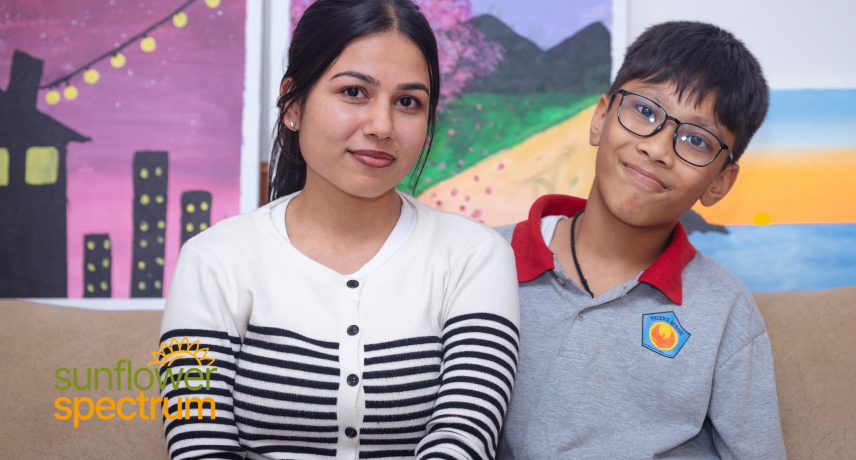
At just 22, Srigya Parajuli has become a steady presence in Samriddha’s journey with autism. As a shadow teacher at Phoenix School, she’s not only learned to guide a neurodivergent child through everyday routines but also discovered her own strength, patience, and purpose. In this candid conversation, she opens up about her experiences, challenges, and the lessons that changed her outlook on life.
1.How did you start your journey as a shadow teacher?
I stumbled upon this opportunity on Facebook and that one click unexpectedly shaped the next chapter of my life.
I applied for the job, attended an interview, and was first considered for Montessori-level work. Later, I was hired by Phoenix School to work as a shadow teacher.
I didn’t know anything about autism. I had never interacted with any child with Autism Spectrum Disorder (ASD) and even the term was new to me.
Initially, I joined as a part-time assistance, but slowly it became a full-time commitment because of my involvement with Samriddha.

2. What were your initial expectations, and what are the differences that you experienced?
I’ve always loved children, so I thought working in a school would be fun and joyful, full of laughter and play. But the reality was more challenging. It wasn’t just fun; it required patience, emotional strength, and deep understanding.
After I met Samriddha, I had to take a deep dive into self reflection, “Can I really do this?”, “Do I want to do this?”. It was tough because I had never dealt with tantrums, sensory needs, or unpredictable behavior before and was clueless on how.
3. Can you tell us about your early days working with the child?
In the beginning, both of us were quite uncomfortable. He wasn’t used to my presence, and I was still learning to understand his behaviors and responses. Building that bond took a considerable amount of time.
A little more detailed guidance from his family about his specific needs would have definitely made things easier. It took time, patience, and careful observation to slowly figure out his preferences and what helped him feel comfortable.
He had a tendency to create fixed patterns and follow them every day, struggling to accept even small changes in his routine. He showed little interest in extra-curricular or classroom activities, and any shift in his schedule or tasks often led to visible discomfort or even meltdowns. Fortunately, this has reduced now, and he’s showing gradual improvement in adapting to changes.
4. How did you begin to understand his behavior and sensory needs?
In the beginning, I didn’t even understand what ‘sensory issues’ were. I had to learn through observation, day by day. I noticed he would touch everything, explore every spot, and react strongly to certain sensations. I had to learn about all of that on my own, through observation and daily interaction.
I haven’t taken any formal training yet, only one short online session that introduced autism understanding in general. Everything else I learned by being with him every day, observing his reactions and responses, and figuring out what triggers him and what calms him.
5. How long have you been working as his shadow teacher, and what does a typical day look like?
It’s been about one and a half years since I started working as his shadow teacher. On regular school days, we reach school at 8:45 a.m. He begins his day with his usual routines like walking around, solving puzzles, and playing on the swing, which he absolutely loves. After that, we head to class, where he completes his planned academic tasks and activities. Throughout the day, I support him during ECA classes, circle time, lunch, and later help with homework once school ends. I usually leave around 5 p.m., from Sunday to Friday.
On school days, my role involves helping him revise academic work, guiding him through EPL tasks, and supporting him during ECA sessions as well. I also assist him in managing his sensory and emotional needs while setting daily goals for his progress.
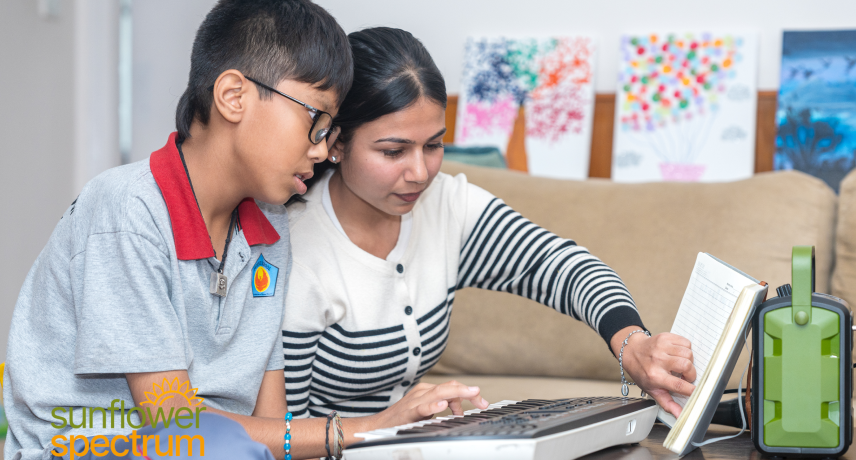
Since school remains closed on Sundays, I reach his home at 10 a.m. The day usually starts with academic revision, EPL practice, and sometimes ECA-related activities. Occasionally, for refreshment, I accompany Samriddha on short outings. After returning home, I help him practice the music taught by his music teacher, work on painting, handwriting, puzzles, and homework, and assist him in rehearsing the dances he performs at school. I usually wrap up and leave around 5 p.m.
6. What are the most important qualities a shadow teacher should have?
Patience and understanding are the most essential qualities. You should always maintain calm even when the child is panicking. It’s important to stay calm, friendly, and polite.
There should be no ego, no anger. You must be kind and emotionally steady.
If you have these traits, you can help the child grow. If you don’t, it’s very hard to handle children with autism.
7. What are the most challenging parts of your role?
The hardest part is being in the middle: between home and school.
At school, everything is structured; at home, emotions dominate. The child behaves differently in both places.
I believe people in my role also face difficulties implementing strict structured guidelines. Sometimes parents might perceive it as being potentially too rigid, or, they may have concerns about the level of kindness and flexibility. Because of these, it can be a challenge to establish full parental trust.
In my case, his mother used to ask about the quality of care and the effectiveness of the methods. I had to explain that meaningful behavioral change is gradual. We’ve come far enough that nowadays, I feel like I've earned her trust and her appreciation to me is a huge catalyst in motivating me towards my work.
Shadow teachers also could do with a little more appreciation, I feel. I hear other peers talk about how they feel invisible and all the credit is earned by therapists only. I strongly believe that the ‘care process’ is a cycle where everyone adds equal contributions.
Another challenge is the lack of proper guidance from families. Sometimes, we’re just told to “handle it” without understanding the child’s deeper needs.
8. What moments make your work most rewarding?
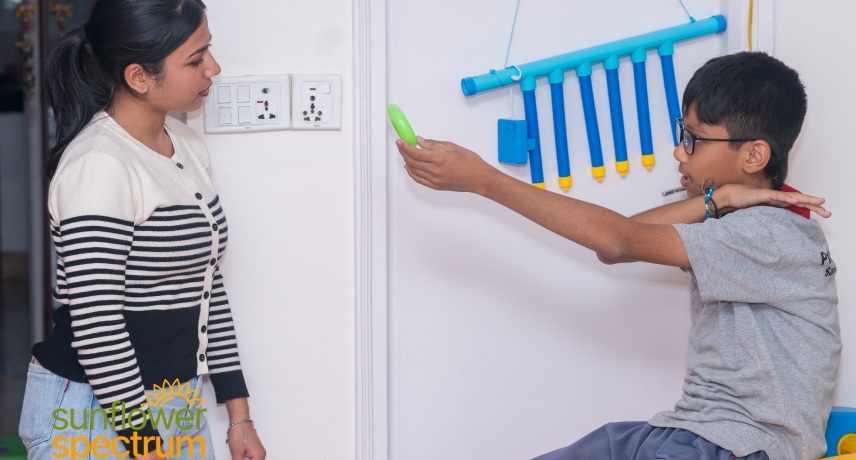
The most rewarding moments for me are when I see real, tangible changes in him. When he controls his tantrums, sits properly, listens, and communicates his needs, it feels deeply fulfilling. I still remember the first time he sat calmly in class and asked for breaks on his own; that moment felt like a shared victory for both of us. Earlier, he couldn’t sit still for even a few minutes and would spend hours on the swing, but now he focuses on his classwork with genuine interest and completes his tasks with care.
He participates in ECA and performs confidently during school events and programs. Watching him play games with friends, take turns, and engage in group activities fills me with pride. Even small things, like peeling potatoes or practicing music, show his growing independence and grace.
The recognition from teachers and parents for his progress feels like a quiet acknowledgment of all the patience, consistency, and heart I’ve put in. Seeing him grow academically, physically, and socially and knowing I’ve been part of that journey, brings me an indescribable sense of joy and fulfillment.
9. How do you define success in your job?
For me, success means seeing the child become self-dependent. The ultimate goal is that one day, he won’t need me.
Of course, there’s emotional attachment. It will be painful for me to be redundant in his life, but I know that for his growth, he needs to be independent. My life will move on, and he deserves a life of his own, full of possibilities. When the day comes, I also know that he’ll miss me too.
10. What kind of support system do shadow teachers in Nepal need?
Right now, the system is not organized. There are no fixed rules or salaries for shadow teachers. Some are hired by schools, some by organizations, and some directly by families.
This makes things very haphazard. There’s also no proper government recognition or training system. Shadow teachers should be trained and certified, just like regular teachers.
There should be government recognition, training, and fair pay.
We spend full days helping children build their independence, and that deserves respect and structure. With proper systems, shadow teachers can contribute much more effectively to children’s growth. We also deserve proper holidays and rest.
Even on public holidays, we often have to work because of the child’s needs and family's expectations. Only during Dashain and Tihar do we usually get leave. We’re human too, we get tired and need rest.
If these things were systematized, the profession would be more respected and sustainable.
11. What advice would you give to someone who wants to become a shadow teacher?
Take it as a heart job, not just a duty.
Be patient, calm, and observant. Learn about autism. Awareness is the first step.
Training would make a huge difference, but even without it, your attitude matters most.
You must accept that progress comes slowly and requires consistency. The child’s world is sensitive, and you need to meet them with love and patience.
12. How has this journey changed you personally and professionally?

Personally, I’ve become more patient and understanding. At first, I used to panic and feel stressed, but now I’ve learned to stay calm and handle difficult moments.
Professionally, I’ve learned how to understand a child’s behavior through observation, to figure out what they want and what triggers them. My problem-solving and emotional intelligence have grown.
This journey has taught me one powerful truth: “Everything is possible.”
In the beginning, I used to think, “This is too hard.” Now I say, “No, it’s possible because consistency changes everything.”
Cite this article
Stuti Sapkota (2025). The Classroom's Beacon - Shadow Teacher. Sunflower Spectrum. https://www.sunflowerspectrum.com/blog/interview-with-shadow-teacher-srigya-parajuli