
 4 September 2025
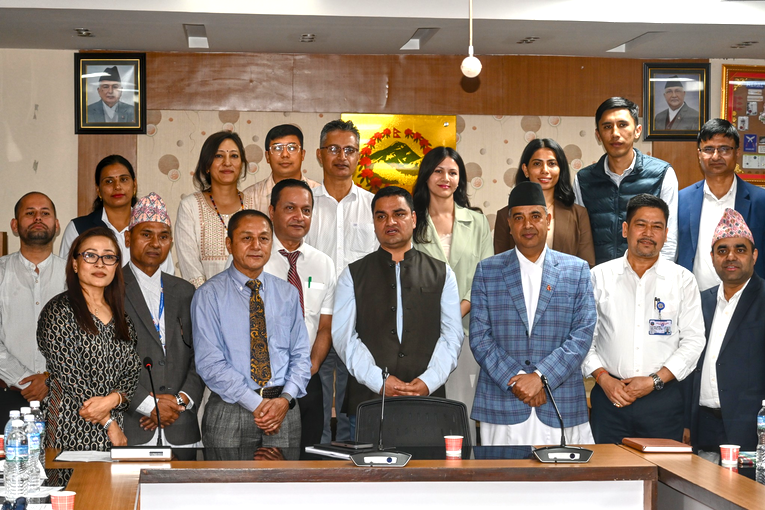
The draft has been welcomed by Hon. Health Minister Pradeep Paudel, who called it a “milestone in shaping Nepal’s response to autism.” Yet, the real test lies ahead: ensuring these proposals do not remain on paper but translate into functional services that touch every corner of the country.
Kathmandu, September 3, 2025
For the first time in Nepal’s history, a draft National Autism Guideline has been formally submitted to the Ministry of Health and Population. Prepared by a taskforce led by Prof. Dr. Deepak Prakash Mahara, an Orthopaedic Surgeon who has been working in Autism Advocacy and care since last two decades, the draft outlines a multi-sectoral framework aimed at ensuring healthcare, education, and rights for individuals with Autism Spectrum Disorder (ASD).
The submission is being seen as a landmark step in acknowledging autism as a pressing public health concern, one that demands coordinated action beyond fragmented services.
The Gaps in Autism Care: Where Nepal Stands Today
Despite scattered efforts from hospitals, NGOs, and private centers, Nepal has never had a national framework to monitor autism care.
- No monitoring institution: Autism services operate in silos, without a central body to oversee quality, access, or policy alignment.
- No government-led intervention: While therapy services exist in public hospitals, families often seek out private providers for consistent or higher-quality support.
- No early screening mechanism: Children rarely undergo structured developmental monitoring, delaying diagnosis and early intervention.
- No vocational or life-skills programs: As autistic children grow into adulthood, there are almost no pathways for employment, independent living, or community participation.
These systemic gaps have left thousands of families unsupported, navigating autism care largely on their own.
Does the National Autism Guideline Draft Address These Gaps?
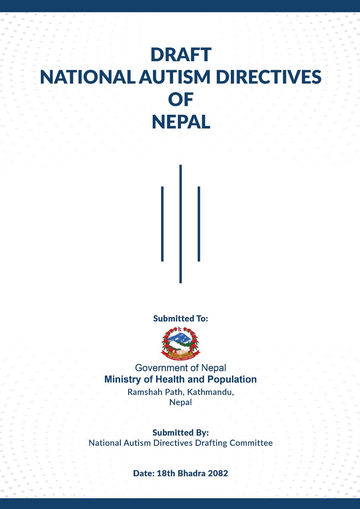
The draft guideline introduces several long-awaited reforms:
- Tri-level structure: A National Autism Committee at federal level, resource centers in provinces, and early identification and basic therapy through Female Community Health Volunteers (FCHVs) at local level.
- Early screening: Use of standardized tools such as M-CHAT, with structured developmental monitoring starting at 12 months.
- Inclusive education: Integration of children with autism into mainstream classrooms, supported by teacher training.
- Lifelong support: Proposals for vocational training, employment opportunities, and independent living support for adults.
- Social protection: Expansion of disability ID cards, financial aid, and insurance coverage for individuals and families.
If implemented as written, this framework could begin closing the most painful gaps in Nepal’s autism care landscape.
A Community Voice on the Taskforce
Among the members of the taskforce is Mr. Dhruba Adhikari, Founder of RxPIN Spectrum Pathways. Mr. Adhikari has been working to empower care service providers and families through RxPIN, an Autism centric technological solution designed to foster a seamless communication between care centers and Families. The mobile app RxPIN, available on playstore, also aims to empower families and educate them on the role of a parent and Autism care at home.
His inclusion highlights the growing recognition of grassroots advocacy and technology-driven solutions in shaping autism policy.
Mr. Adhikari has been working to bridge autism care through digital tools, research, and collaborative platforms that connect families, therapists, and institutions. His presence on the taskforce reflects the community’s demand for a more inclusive, tech-enabled future of care.
“This is the first officially recognized artifact of autism identification and the foundation of upcoming legal frameworks for autism care in the future. Disability is Real. Disability should be discussed”, says Mr. Adhikari.
Looking Ahead
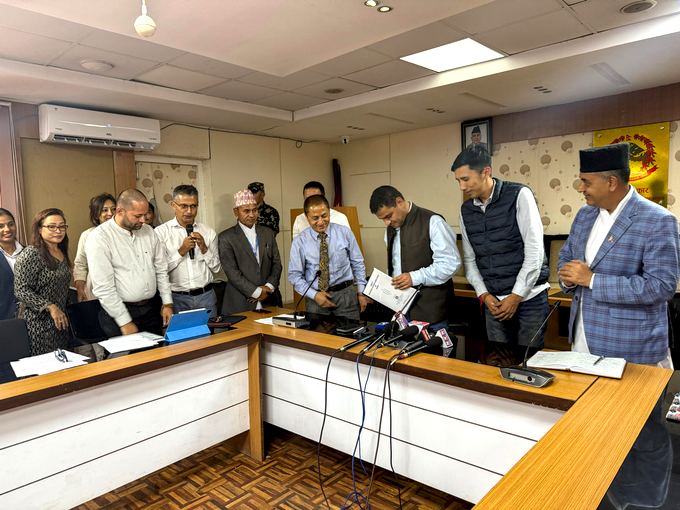
The draft has been welcomed by Hon. Health Minister Pradeep Paudel, who called it a “milestone in shaping Nepal’s response to autism.” Yet, the real test lies ahead: ensuring these proposals do not remain on paper but translate into functional services that touch every corner of the country.
For Sunflower Spectrum, this moment is less about celebration and more about responsibility. As a community-driven initiative, we remain committed to advocacy, collaboration, and innovation - working alongside government, private sector, and families to turn this draft into a lived reality for autistic individuals across Nepal.
Cite this article
Anurag Sharma (2025). Nepal Takes a Historic Step Toward Inclusive Autism Care with National Guideline Draft. Sunflower Spectrum. https://www.sunflowerspectrum.com/blog/nepal-takes-a-historic-step-toward-inclusive-autism-care-with-national-guideline-draft