
 1 April 2025
“Through music, we find connections where words often fall silent.”
It has been said that music talks to the soul directly and transcends words, making it a universal language. But may music be more than that for those with autism?
Could it serve as a means of communication, a bridge to understanding, or even a haven in an often overwhelming world?
Let’s examine how music speaks to autistic brains and why it may be one of the most meaningful forms of communication.
Music as a Gateway to the Senses
Many people with autism have enhanced sensory experiences, which make the environment a flurry of distracting sights, sounds, and textures. However, this increased awareness also reveals a special connection to music and sound. Some people are drawn to the patterns, rhythms, and structures that music provides, while others may find particular sounds upsetting.
Think about the comforting embrace of a well-known song or the relaxing influence of continuous drumming.
Music can provide autistic people structure and regularity, turning chaos into harmony. It turns into a sensory portal that provides comfort as well as a means of processing and understanding the outside world.
Using Music to Communicate
Many people with autism may find it difficult to communicate, especially if they are nonverbal. However, music has the ability to break through these boundaries. More eloquently than words could ever convey happiness, sorrow, or enthusiasm, a music can. In this way, music turns into a language that uses rhythms and tones instead of words to communicate.
There are numerous accounts of autistic children who discovered their voice via song. A nonverbal youngster may tap rhythmically to indicate anguish or hum a melody to convey joy. They can express their emotions via music in a secure and comfortable way.
The Scientific Basis of Autism and Music
What many parents, therapists, and people have long intuitively known — that music helps change autistic minds — is supported by research. Research has indicated that music therapy can help people with autism communicate more effectively, engage with others more effectively, and feel less anxious. Music is an accessible and captivating medium because its ordered patterns, such rhythm and repetition, suit the cognitive preferences of many autistic persons.
Narratives of Change
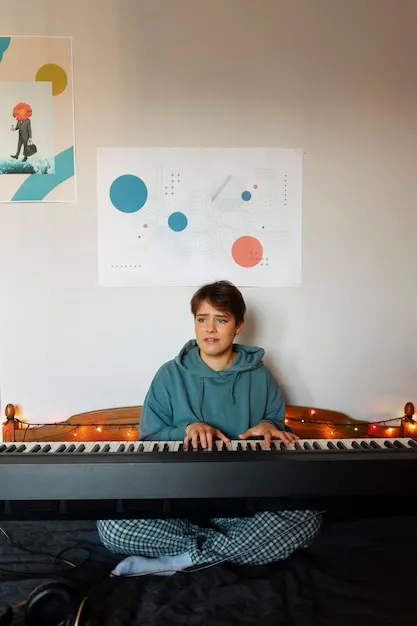
Consider the case of Jacob, a young autistic child who found it difficult to relate to other people. Despite the poor success of traditional therapy, a change occurred when he was introduced to the piano by a music therapist. Before long, Jacob was playing whole pieces as his fingers moved across the keys. He discovered that music was a means of both self-expression and interaction with the outside world.
Or take the example of persons with autism who have achieved success as professional musicians. Their remarkable accomplishments are the result of their exceptional capacity for intense concentration and the ability to hear minute details in sound. These tales serve as a reminder of the neurodiverse community’s unrealized potential.
A Wordless Language
Can autistic minds use music as a language, then? It appears that the response is a resounding yes. Music has a special and transformational potential, whether it is used as a sensory haven, an expressive tool, or a connection medium. It provides people on the spectrum with a means of thriving rather than merely coping.
Perhaps this significant link between music and autism might teach us as we continue to embrace neurodiversity. Even while we may appear to be very different from one another, listening — really listening — might be the secret to better understanding one another if music is, in fact, a global language.
Thus, for some, music is an art; for others, it’s a voice that cannot be silenced.
Cite this article
Stuti Sapkota (2025). Can Autistic Minds Use Music as a Language?. Sunflower Spectrum. https://www.sunflowerspectrum.com/blog/can-autistic-minds-use-music-as-a-language