

 7 October 2025
For up to 40% of the global population, a common genetic variation, the MTHFR polymorphism, causes this processing station to run slowly. For these individuals, the enzyme might work at only 30% to 65% efficiency. When they take FA supplements, the inactive FA builds up, leading to two major problems: 1. Low Fuel 2. Toxic Buildup
The journey to a healthy pregnancy and early child development post pregnancy is supported by tiny molecules, none more crucial than Vitamin B9, the generic term for folate. While most people know of its synthetic form, folic acid (FA), as a pregnancy must-have, research from National Library of Medicine, highlights a critical distinction: the active, natural form, 5-Methyltetrahydrofolate (5-MTHF), is far superior.
(Reference: https://pmc.ncbi.nlm.nih.gov/articles/PMC9380836/)
This difference isn't merely theoretical; it's rooted in genetics and metabolism, linking vitamin supplements to common over-the-counter drugs, especially paracetamol (acetaminophen). The latter has been a source of debate since President Donald Trump's comments and may actually influence the likelihood of neurological conditions such as Autism Spectrum Disorder (ASD).
Folic Acid vs. Active Folate: Why Your Supplement Might Be Inefficient
Folate is vital for making DNA, growing new cells, and supporting all rapid growth—exactly what a developing fetus and a baby needs. Because it’s hard to get enough from food (cooking destroys up to 90% of natural folate), supplements and fortified foods became standard practice.

The Conversion Bottleneck
The problem lies with folic acid (FA). It's a synthetic precursor that the body can't use directly. It must be converted into the active form, 5-MTHF, through a series of steps involving special enzymes, especially one called MTHFR.
Think of your body's metabolic pathway as a delivery system:
- Folic Acid (FA): The raw package that needs processing.
- MTHFR Enzyme: The slow-moving processing station.
- 5-MTHF (Active Folate): The ready-to-use fuel.
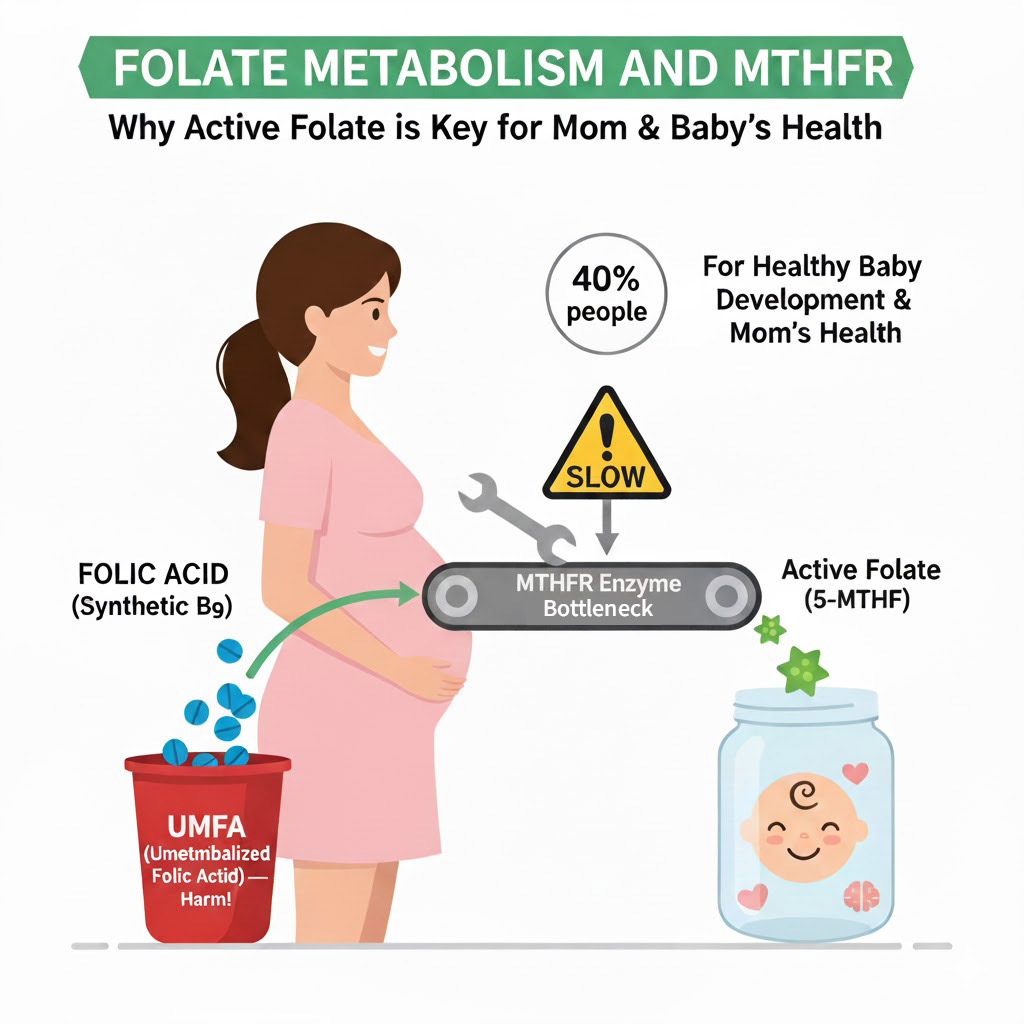
For up to 40% of the global population, a common genetic variation, the MTHFR polymorphism, causes this processing station to run slowly. For these individuals, the enzyme might work at only 30% to 65% efficiency. When they take FA supplements, the inactive FA builds up, leading to two major problems:
- Low Fuel: Not enough active 5-MTHF is produced to support the pregnancy.
- Toxic Buildup: The unprocessed FA, called Unmetabolized Folic Acid (UMFA), accumulates in the blood, where it can actually compete with the small amount of active folate present, further worsening the deficiency.
The Better Choice: Bypassing the Block
The solution is to bypass the bottleneck entirely by supplementing with the active form, 5-MTHF (such as the highly bioavailable form, Quatrefolic). This form is immediately ready for use, ensuring the mother and baby receive the full benefit regardless of the mother’s MTHFR status.
The Homocysteine Danger: A Threat to Fertility
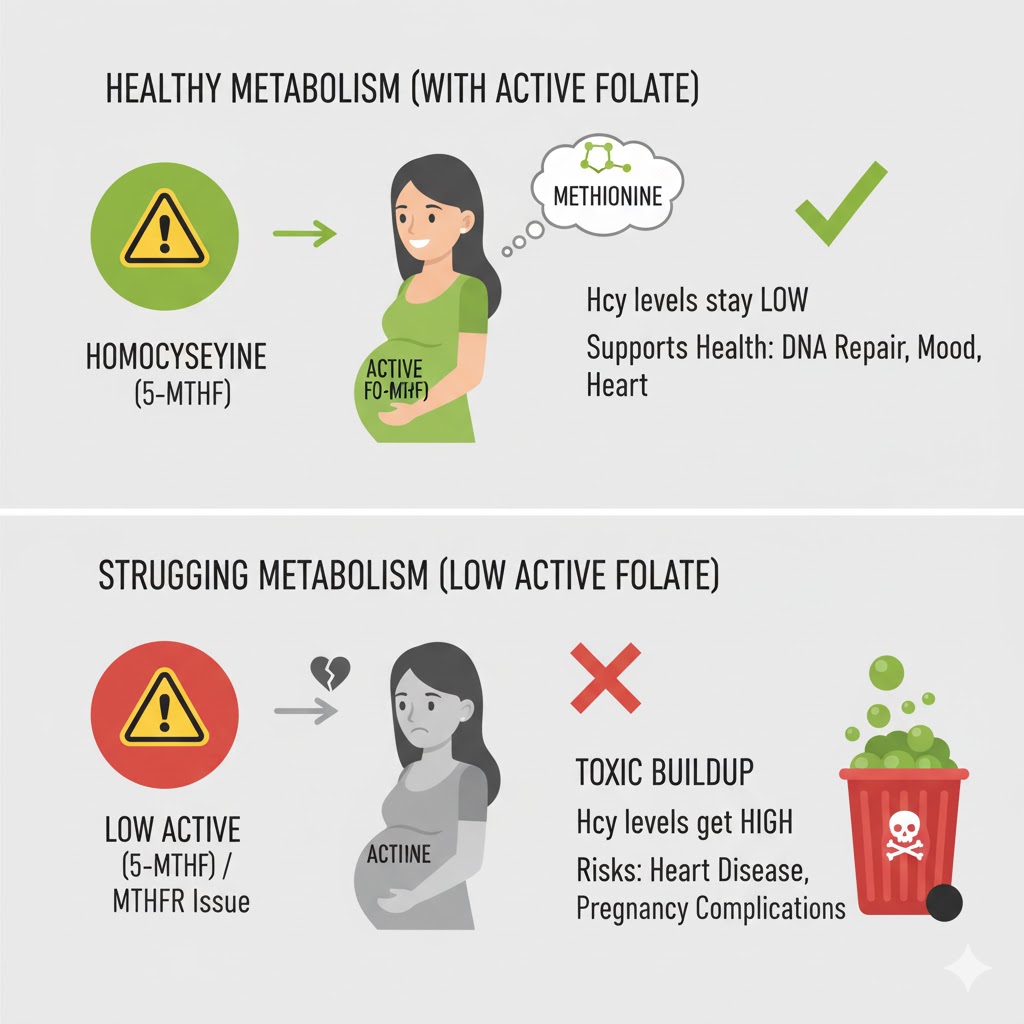
The immediate result of low active folate is a disruption in the one-carbon metabolism cycle, which is fundamental for life. This cycle is responsible for detoxification, making neurotransmitters, and regulating genes.
The key danger sign of a sluggish cycle is the buildup of a toxic amino acid called homocysteine (Hcy). Active 5-MTHF is essential for recycling Hcy into a useful nutrient. When 5-MTHF is lacking, Hcy accumulates, leading to hyperhomocysteinemia (HCys).
High Hcy levels are a known independent risk factor for:
- Neural Tube Defects (NTDs): Severe birth defects that occur early in pregnancy.
- Fertility Issues: Recurrent pregnancy loss, preeclampsia, and implantation failure.
- Cardiovascular Disease: Damage to blood vessels.
Studies show that active folate (Quatrefolic) supplementation is significantly more effective at lowering these dangerous Hcy levels than high-dose folic acid, making it a powerful tool for couples struggling with infertility, especially those with the MTHFR gene variation.
The Paracetamol Connection: Stressing the Detox System
The importance of active folate becomes even clearer when we consider how the body handles common medications like paracetamol (acetaminophen), which is often used during pregnancy for pain or fever.
The body detoxifies paracetamol using resources provided by the same one-carbon metabolism cycle. This pathway is critical for making glutathione, the body’s master detox agent.
A Metabolic Double-Whammy
- Paracetamol Use: Taking the medication increases the demand on the detoxification system, consuming the available glutathione.
- Folate Insufficiency: If a pregnant woman has the MTHFR gene variant and is relying on inactive folic acid, her one-carbon cycle is already underperforming. She has a limited capacity to both process the FA and produce the necessary detox agents.
The use of paracetamol, while generally safe, places an additional metabolic load on a system that may already be compromised by genetics and poor supplementation. This can temporarily deplete the essential compounds (like active 5-MTHF and glutathione) needed during the most critical periods of fetal brain and nervous system development.
Folate, Paracetamol, and the ASD Link
The link between these factors has profound implications for neurological health:
- Folate and ASD: Research has already observed that children with Autism Spectrum Disorder (ASD) often show anomalies in their folate and homocysteine metabolism. We also know the specific as ‘Having a Gut Problem’. The active folate pathway is crucial for creating neurotransmitters and regulating genes, processes essential for healthy brain development.
- Mitigating Risk: Research suggests that active folate supplementation during pregnancy "may reduce the risk of delivering newborns affected by ASD." This benefit comes from ensuring the brain has the maximum amount of active 5-MTHF fuel available.
By choosing active folate (5-MTHF) over synthetic folic acid, expectant parents are essentially fortifying the body's entire metabolic foundation. This robust foundation can better support the fetal nervous system and more efficiently handle common stressors, like the need to detoxify medications.
In a world where both genetic variability (MTHFR) and common drug use (paracetamol) can strain the body's resources, active folate is the scientifically supported choice for maximizing health potential and minimizing metabolic risks during the most delicate stages of life.
Cite this article
Anurag Sharma (2025). Active Folate: The Hidden Key to Developmental Health and the Paracetamol Puzzle. Sunflower Spectrum. https://www.sunflowerspectrum.com/blog/active-folate-the-hidden-key-to-developmental-health-and-the-paracetamol-puzzle